
In my previous essays on Pretty Woman (1990), Pretty Woman — Part 1: The Beautiful Lie and Pretty Woman — Part 2: The Mythic Architecture, I argued that the film operates as a modern echo of an Arthurian legend. Despite the (some might say excessive) length of that analysis, there was one topic that I failed to address: if Pretty Woman is an Arthurian legend and Vivian is a modern-day Lady of the Lake, where is Excalibur? After all, Excalibur is one of the most defining symbols of the Arthurian myth.
Arthur’s sword, Excalibur, is most prominently known through two stories: “the sword in the stone” and where The Lady of the Lake gifts Arthur the sword. Both of these stories share the same features: Excalibur is bestowed to Arthur, it comes from outside the normal world, and it confers legitimacy (in this case, indicating Arthur’s kingship).
Is Excalibur, like so many other aspects of Pretty Woman, hidden in plain sight? What object could fulfill the Excalibur role in the film?
One of the iconic scenes is the shopping spree and the dresses and other clothes that are purchased. But these don't fit the Excalibur criteria for a simple reason: Vivian is the one receiving them, not Edward. Excalibur needs to be bestowed by the Lady of the Lake, not to her.
What about the umbrella at the end of the film when Edward rescues Vivian? This is promising because the umbrella maps directly to the knight’s sword in the fairy tale ending that Vivian named. Edward even treats it like a sword, raising it up as a knight would. It’s a nice visual rhyme, but it doesn’t actually offer any additional meaning; it’s not bestowed upon Edward (we don’t even know where it came from), and he actually abandons it as he climbs the fire escape to reach Vivian. It’s more a prop in the fairy tale than a meaningful symbol.
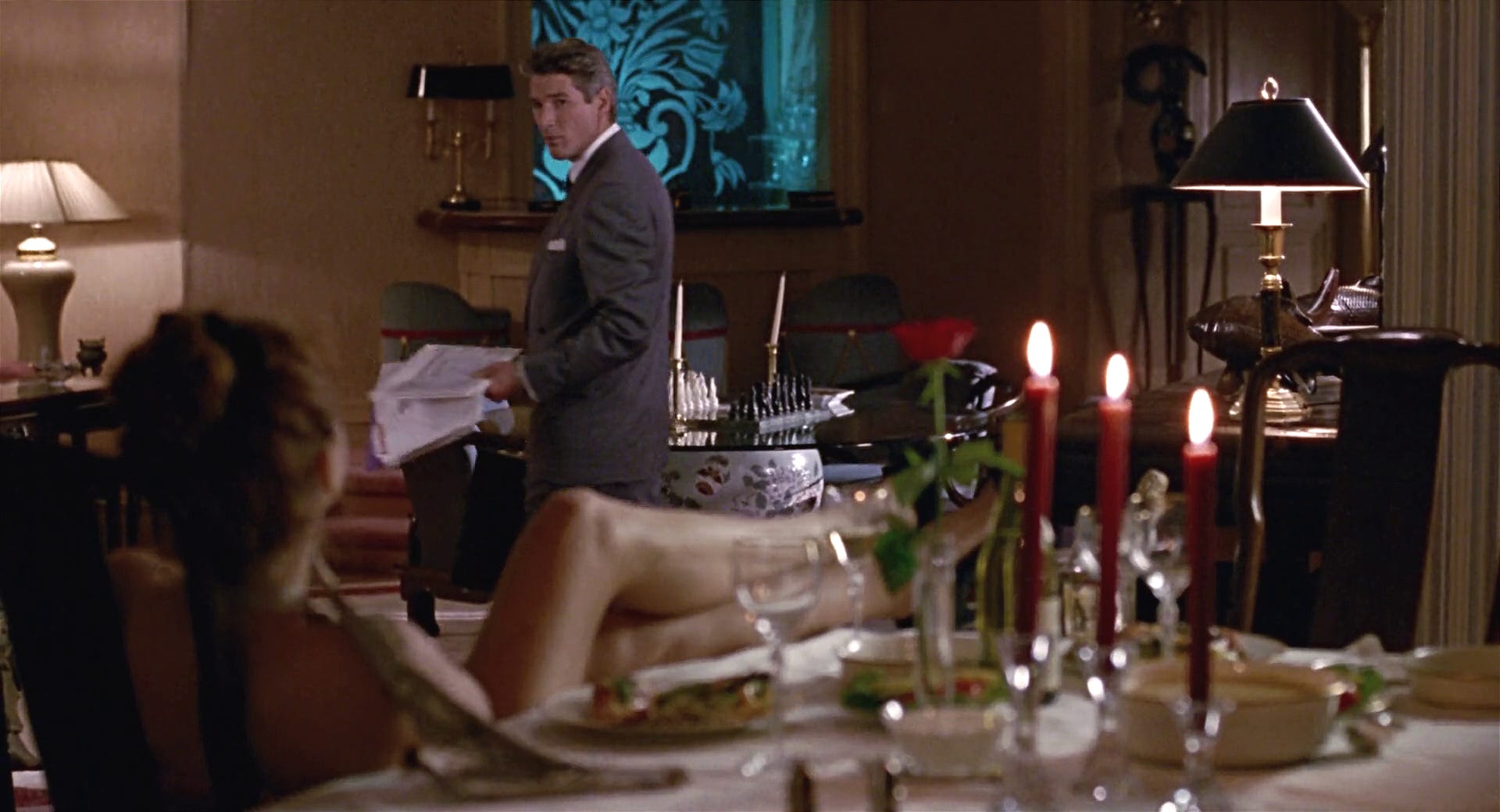
The only thing Vivian really gives to Edward is a single tie. However, the scene is designed to be a playful, sexy, fantasy rather than carry meaning.
The film really does seem uninterested in providing Vivian with something to bestow.
But what if the absence of a physical Excalibur is not a flaw but part of the structure of the film? The film’s central theme is non-transactional connection. So the gifting of Excalibur cannot be a transactional exchange—which aligns with the Excalibur story itself. One difference between the Lady of the Lake Excalibur story and Pretty Woman is that in the classic tale, the Lady of the Lake is a liminal, magical being outside of the world, but in Pretty Woman, Vivian’s Lady of the Lake role is most decidedly a character that lives in the story itself. This constraint makes it very difficult for Vivian to bestow a physical object without it reading as transactional. Also, a publicly bestowed object that confers legitimacy is too narratively on the nose for a modern rom-com; it’s too explicit. The film works on subtext and internal transformation that are mostly invisible to everyone but Vivian and Edward.
Let’s take a second look at the tie because, although it seems innocuous at first glance, there is a recurring appearance of ties in the film that is revealing. There’s the earlier scene where Vivian adjusts Edward’s tie and makes a joke about having sex with the debate team, the amusing back-and-forth banter when she acquires the tie in the store, and, finally, where Vivian waits for Edward in the penthouse wearing only the tie.
Vivian: How was your day, dear?
Edward: Nice tie.
Vivian: I got it for you.
Garry Marshall’s signature technique that permeates Pretty Woman once again makes appearances in all these tie scenes: a joke is used to hide symbols and significant commentary so that the audience feels like they are watching something light and breezy while the hidden meaning and emotional core resonates undetected.
One very interesting aspect that is easy to gloss over is that Vivian doesn’t actually purchase the tie—she asks for the personal tie worn by one of the salesmen and he gives it to her. Notice her specific words, “I got it for you.” Not “I bought it for you.” It wasn’t acquired through a normal business transaction. She then wears it herself in an intimate fashion and gifts it to Edward. Then later, at the polo match, Stuckey notices the tie as a sign of Edward’s transformation.
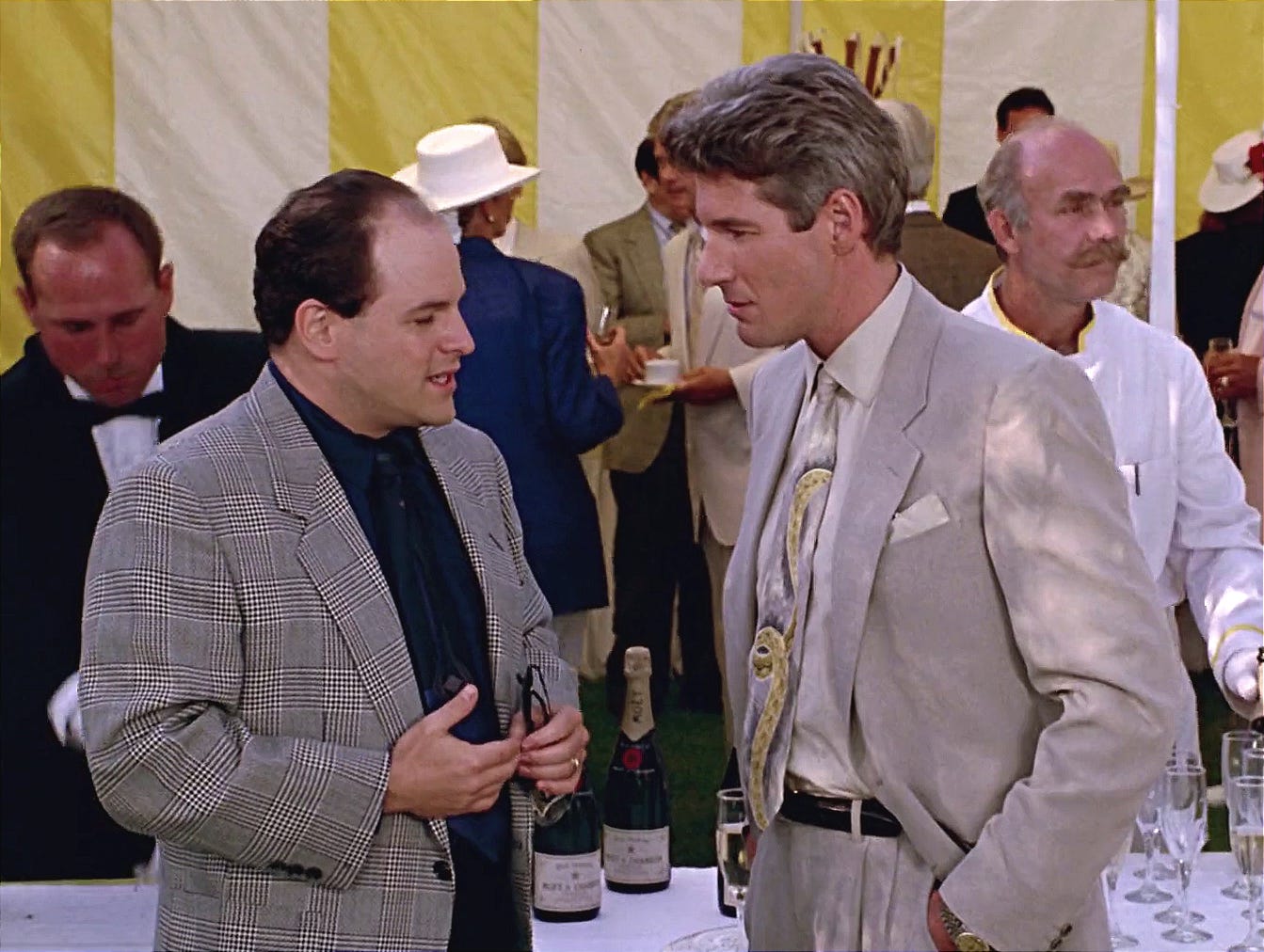
So on closer examination, the tie is actually a good candidate, but is it really an Excalibur proxy? It’s bestowed by Vivian, The Lady of the Lake, and is a non-transactional gift, but it lacks the one feature Excalibur requires: it doesn't confer legitimacy or kingship—it's just a tie with a more modern design. In addition, the tie is given before Edward’s scene in the tub with Vivian where she witnesses his wound.
While the tie is not Excalibur, it does establish a pattern that Vivian’s gifts signify transformation. This reaches its culmination in a private moment of meaning that does involve the recognition of kingship: The Kiss. A kiss on the lips was the one thing Vivian withheld from Edward (narratively because it's too personal). When Vivian kisses Edward on the lips, this is a purely non-transactional gift—it's the one thing Edward's wealth and power could not buy in their relationship—so this kiss is where Vivian recognizes and confers kingship on Edward.
Ultimately, the missing Excalibur isn't missing at all—it's been internalized. The sword has become a kiss, a private moment invisible to everyone but Vivian and Edward. And even though the world in the film never witnesses it, we experience that mythic catharsis while the film maintains its surface realism.
Explore more hidden mythologies in cinema with free Cinemyth essays.