
In Pretty Woman — Part 1: The Beautiful Lie I explored how Garry Marshall’s 1990 classic hides an ancient myth beneath its glossy rom-com veneer. Like the magician in the opening scene, the film uses misdirection and sleight of hand to smuggle in archetypes and myths that give its charm unexpected depth.
Pretty Woman plays like a modern echo of an Arthurian legend: Edward Lewis is the Wounded King, Vivian Ward is a Loathly Lady and Lady of the Lake, and hotel manager Barnard “Barney” Thompson, the priestly guardian of the inner sanctuary.
This essay examines how the mythic architecture flowing beneath the surface of Pretty Woman forms a current that enhances the emotion of the transformations at the heart of the film, eventually revealing how value is reclaimed and meaning restored.
Vivian Ward
Julia Roberts’s embodiment of Vivian was a star-making performance that still leaps off the screen. Besides her joyous energy, one of the first things I noticed was that almost everybody looks at her—I mean, they literally turn their heads and stare as she simply moves through the world. It seems obvious why. Throughout the film she’s either dressed inappropriately, looking out of place, or dressed elegantly, beauty personified.
As the Loathly Lady
In the first scene of Vivian, a neighbor stares at her as she descends the fire escape to avoid the landlord collecting rent. And the looks continue throughout the first act, tapering off as the movie unfolds.
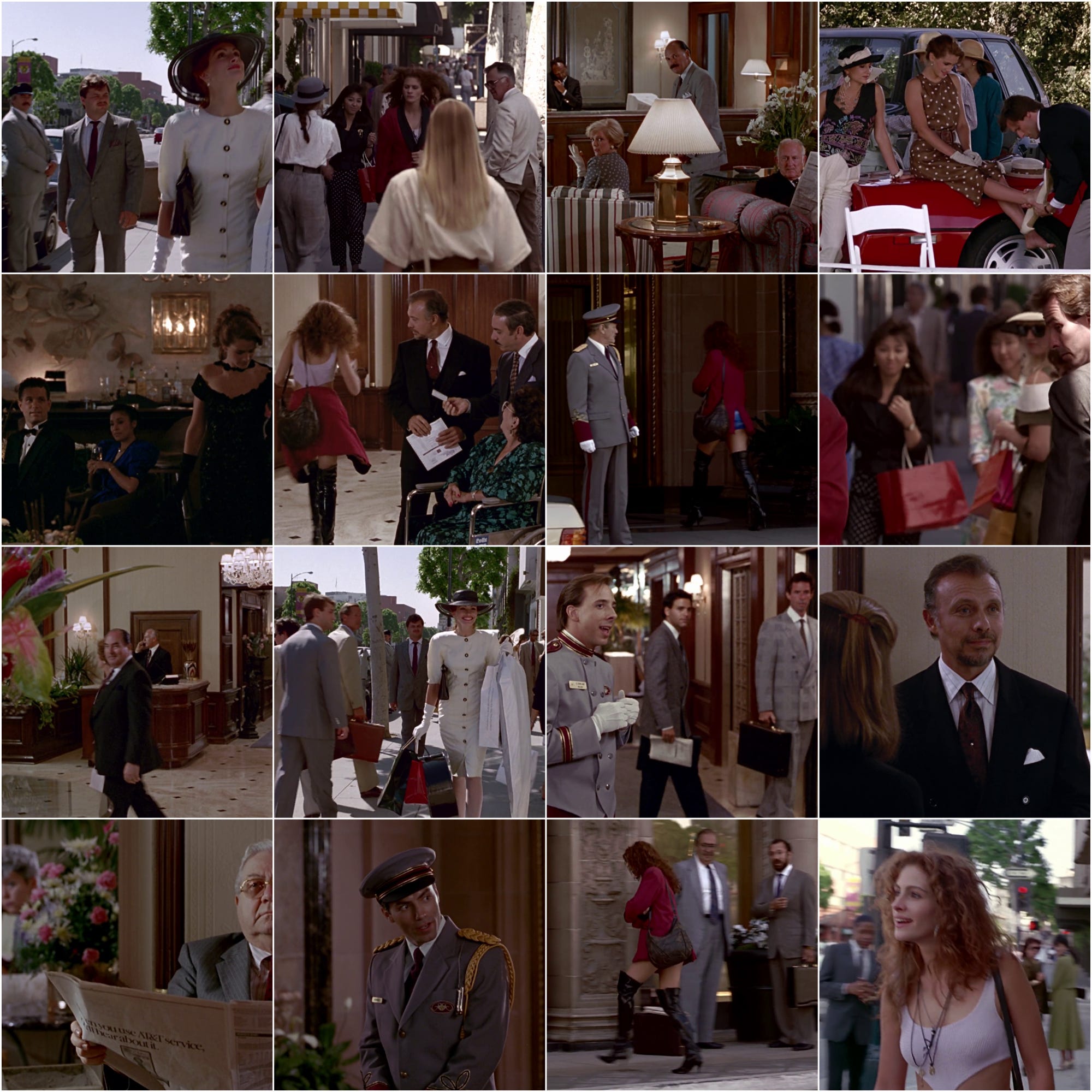
These glances, plus the outsize effect that Vivian has on others, made me start to wonder if she was some sort of muse character. But on closer examination, her effect on Edward was inspiring, but Barney’s interactions varied from doting to almost worshipful, while others even had negative reactions. So the muse pattern didn’t quite hold.
That’s when it started to click: she’s less of an inspirational figure and more a mirror, reflecting the underlying values of other characters, which began to resemble the archetype of the Loathly Lady from medieval romances.
S. Elizabeth Passmore defines the Loathly Lady as “a literary trope of a shapeshifting female who transforms from great beauty to intense ugliness in relation to a character test of the male protagonist.” In the Arthurian version, such as Chaucer’s The Wife of Bath’s Tale, this also involves some aspect of sovereignty (e.g., a woman’s right to choose for herself).
Pretty Woman uses a modern variation of this archetype where the test is not limited to any specific character. Virtually every character that Vivian interacts with is subjected to a simple test: how do they treat her. When dressed as a prostitute, can they look past the social judgment and see her genuine worth? What makes Vivian “loathly” in the modern sense isn’t her appearance but her social position as a sex worker. She’s attractive, but her clothing and manner mark her as improper within respectable society. This looks like the obvious answer. But what about all the situations where she’s dressed elegantly, looking beautiful, fitting in, and still testing those around her? And we also have a similar lingering issue about the glances, looks, and stares Vivian receives in the first half of the film, and why do they diminish as the story progresses?
We can answer all of those questions if the attention, the glances, and the tests are not because of Vivian’s station in society, or her profession, or her appearance. It’s the dissonance between her inner fragmentation and her outer vitality. This contradiction creates a kind of spiritual disturbance that draws the eye or causes a positive or negative reaction. It’s like people can sense something is off, even if they can’t articulate it. That fragmentation is visible even when it shouldn’t be. The glances vanish not because she becomes invisible, but because the dissonance resolves. As she heals, she becomes integrated. And when her outside and inside finally match? She’s an integrated whole that doesn’t attract attention like when she was broken.
So, what happens when people encounter this spiritual disturbance? How do they respond? The answers are illuminating.
The Shopkeepers
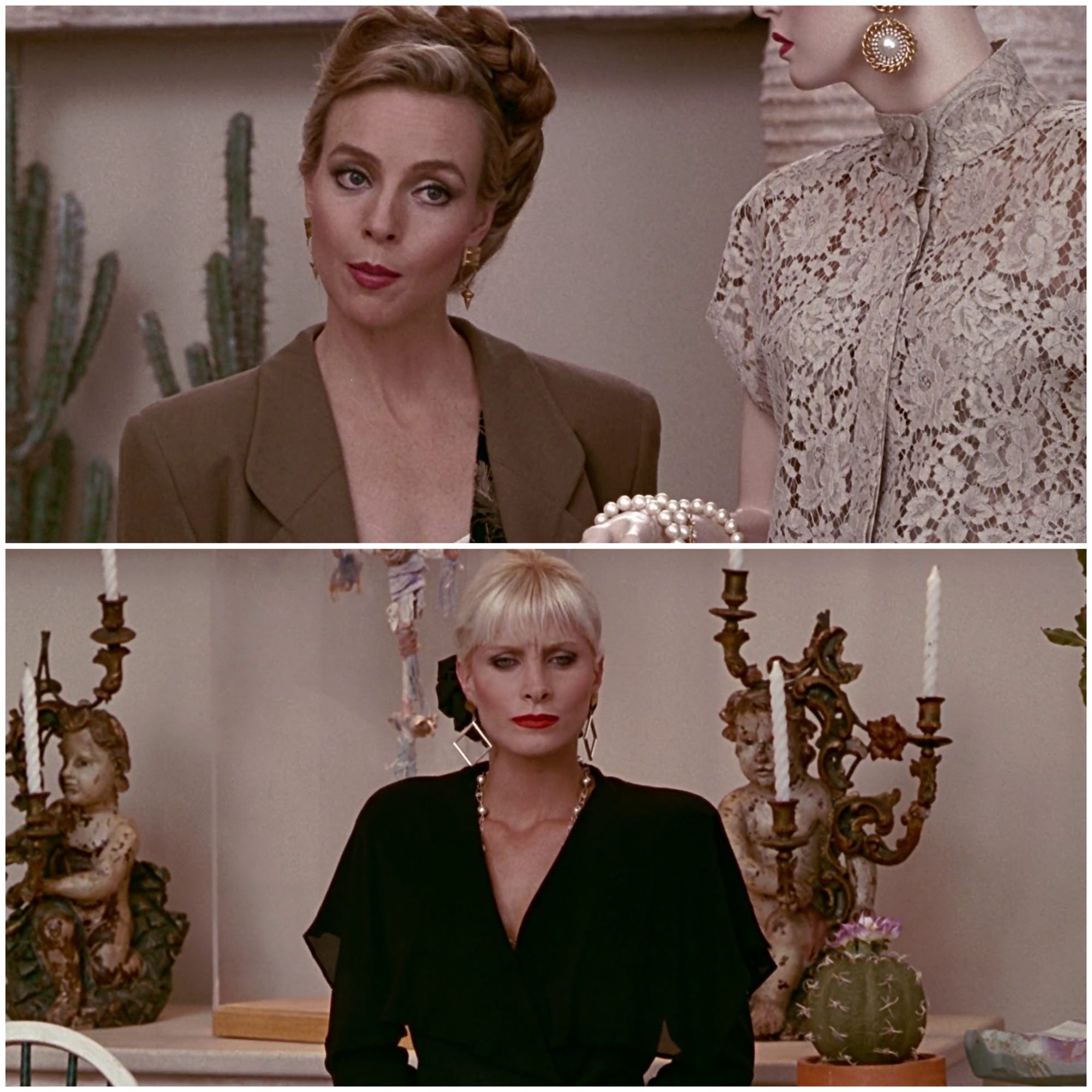
The shopkeepers encounter someone who doesn’t fit their narrow world, and their reaction is immediate, dismissive, and intentionally humiliating. It reads as simple cruelty. But it can be seen as a spectacular failure of recognition.
Stuckey
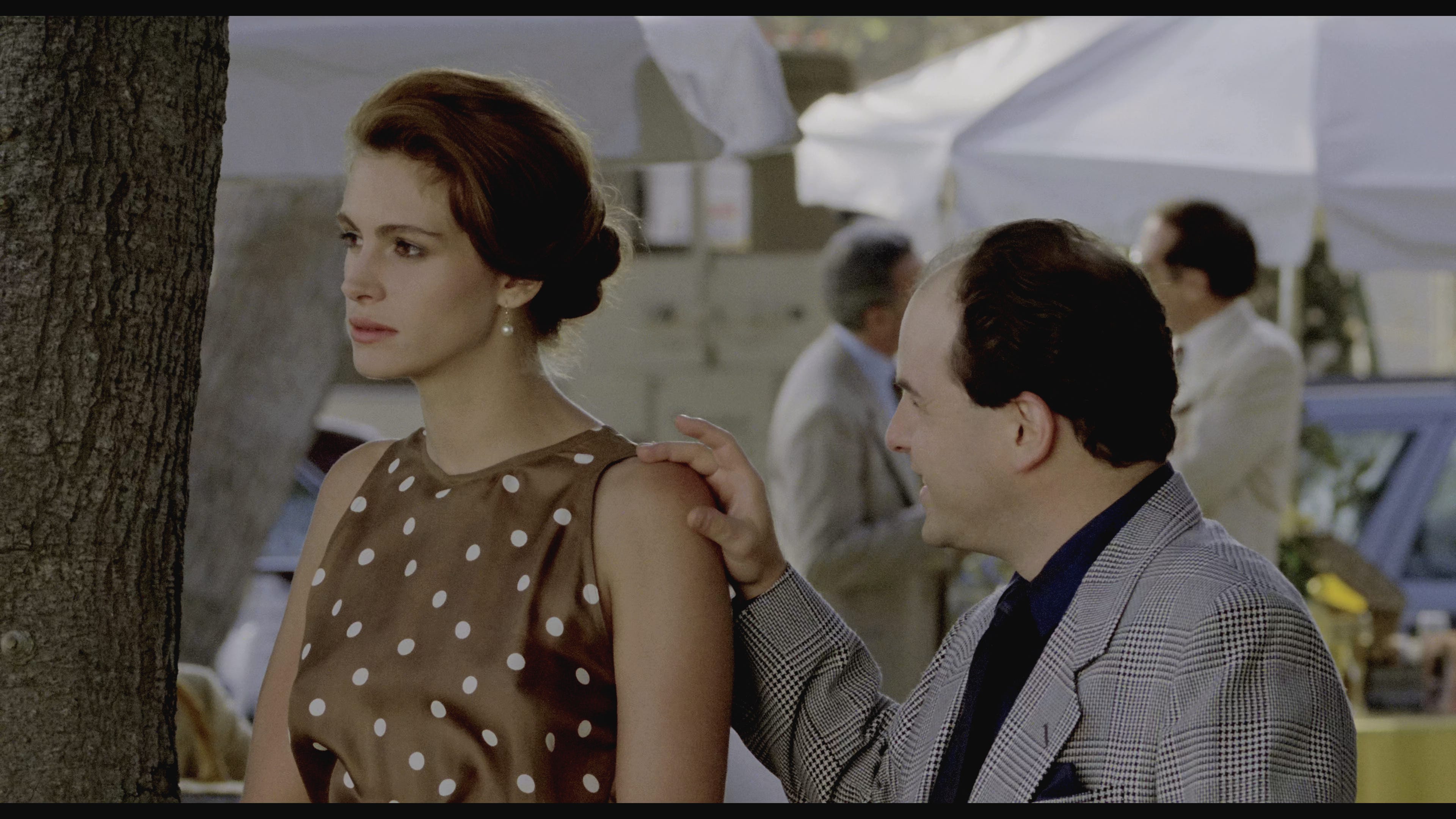
Philip Stuckey, on the other hand, manages to fail in a way that outdoes even the cruel shopkeepers. Stuckey first meets Vivian at the polo match. On his first interaction he is cordial, offering Vivian a glass of champagne. But over the course of the day, Stuckey grows perplexed. Something about her bothers him. He confronts Edward about her and pries long enough for Edward to share the secret that Vivian is a prostitute. Stuckey immediately goes over to Vivian, who is standing alone. He approaches her, slowly brushing her arm with his sunglasses and then resting his hand on her shoulder, rubbing it with his thumb until his wife calls him away. In Stuckey’s mind, learning that she’s a prostitute strips away her personhood, and she becomes an object. His touch isn’t violent, but it’s invasive: a violation of kindness and propriety that foreshadows Stuckey’s later aggression. More importantly, it exposes Stuckey’s spiritual bankruptcy in every aspect of his life, including his marriage.
Barney
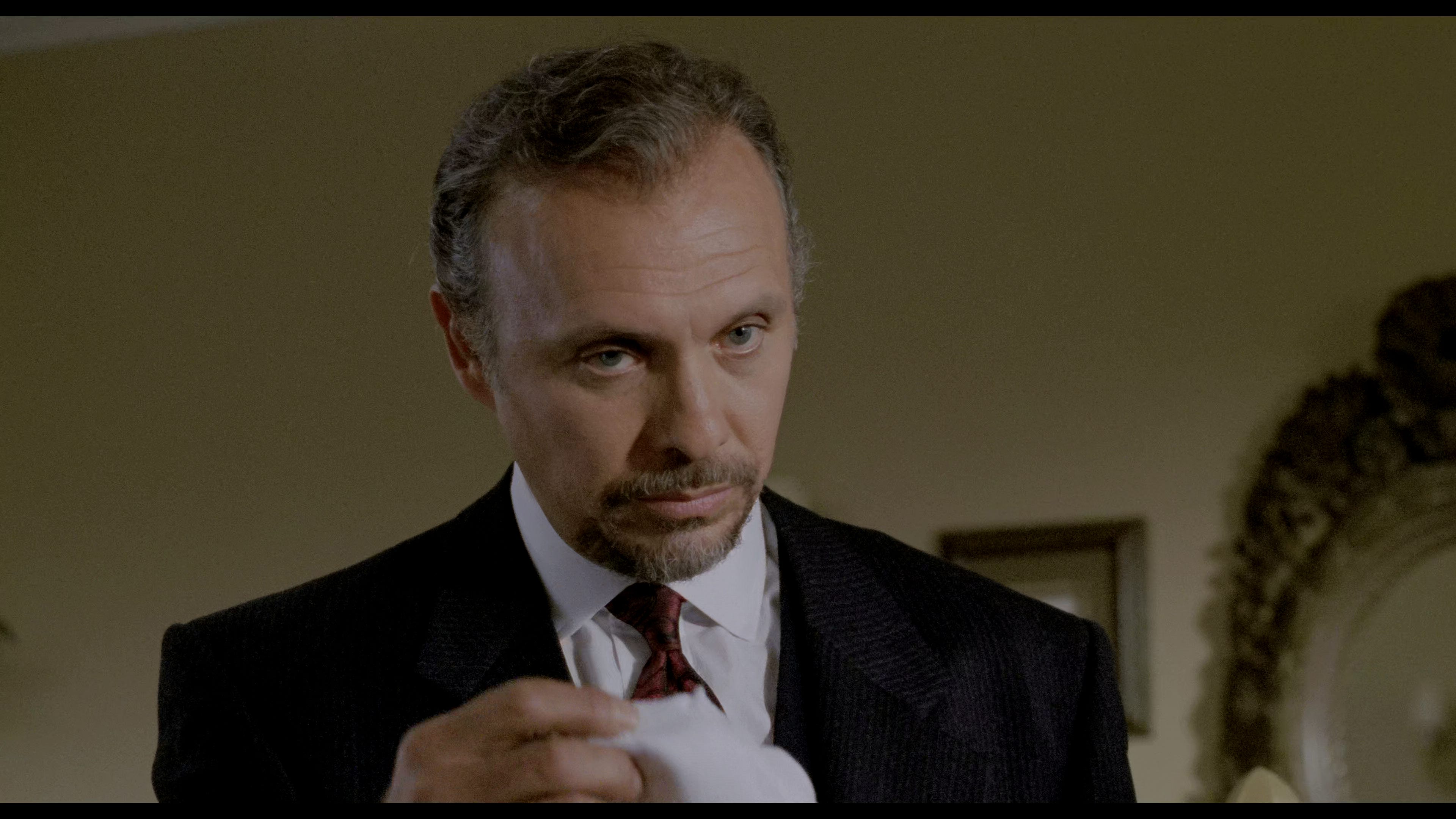
The hotel manager, Barnard “Barney” Thompson, offers a starkly different response. Barney appears out of the wings as Vivian returns from her shopping trip and immediately intercepts her. It’s telling that Barney’s first interaction with the interloper is not to accuse or judge: all he does is ask questions and mirror her responses back. She moves into the elevator, and Barney escorts her out and back to his office for a little chat. Vivian plays her trickster game when asked her name (“What do you want it to be?”), which Barney puts a stop to immediately (“Don’t play games with me”). He reads her a polite version of the riot act and tap dances around the fact that she is a sex worker. This is played for comedic effect but also shows his care and discretion in not acknowledging impropriety and, since they are alone, this act of saving face is purely for Vivian’s benefit. Barney then encourages Vivian to dress more appropriately. This is where Vivian pulls out wads of cash and breaks down and cries over how she wasn’t able to buy a dress. Barney is taken aback. His eyes soften, his head tilts ever so slightly, and he looks down at the money and then back up—the effect is like a double take (mirroring his initial double take when Vivian walked past him in the lobby earlier in the day). It’s a tour de force of minimalistic expression. It’s all in the eyes: concern, gentleness, recognition. He extends a handkerchief and returns the money. When Vivian drops her guard—when the mask falls away—Barney sees her completely for the first time. Vivian thinks he’s calling the police, and we, the audience, still sense Vivian could be in trouble. But in a surprise reversal of expectations, it turns out that Barney is actually calling in a favor to help Vivian buy a dress. When confronted with genuine vulnerability, Barney’s response is recognition and grace. Once he finally sees Vivian, he acts with compassion and assistance.
The Morses
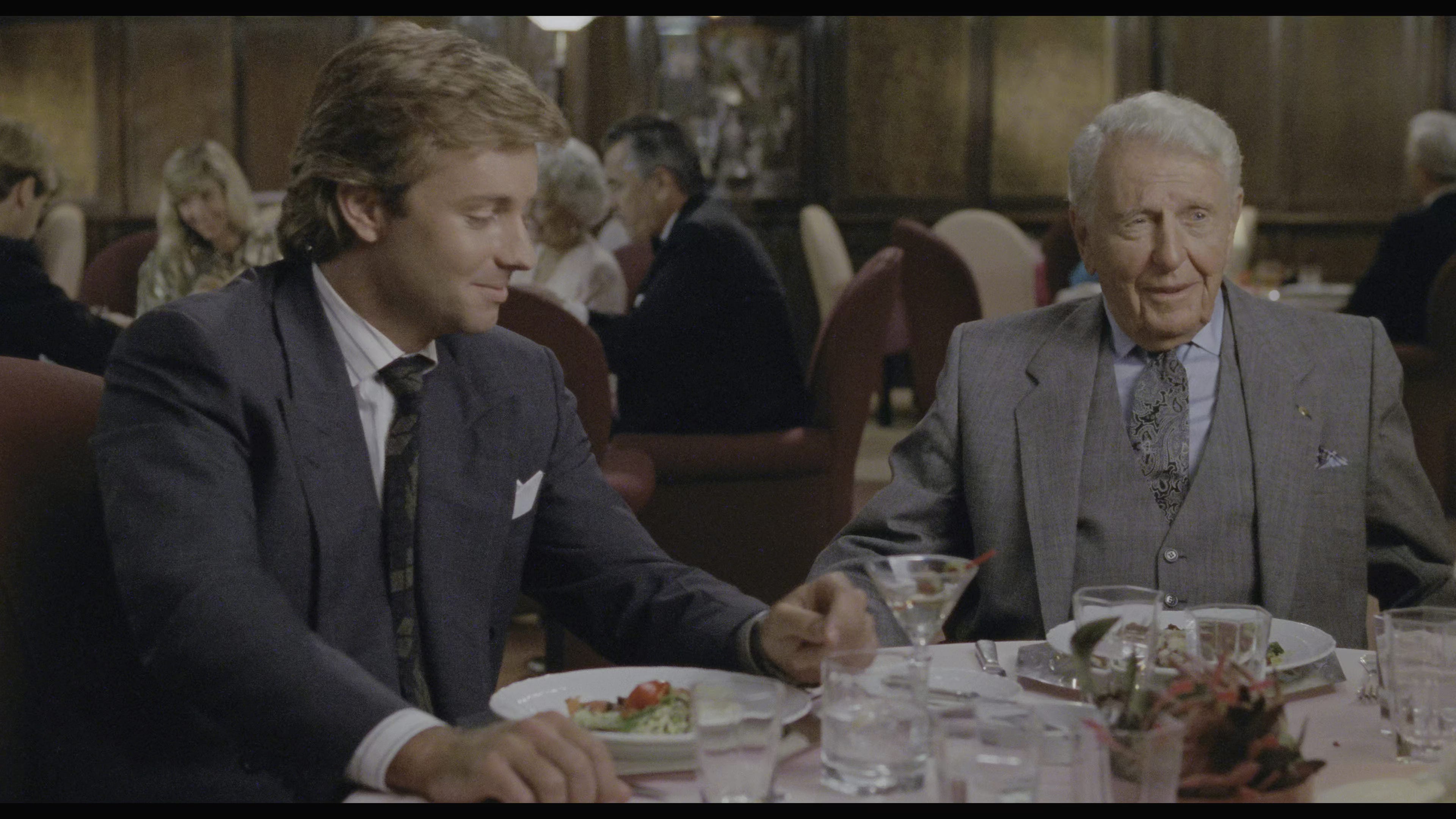
James Morse and his grandson, David, provide an encounter that quietly shifts everything. Their response is understated, almost easy to miss—nothing dramatic, profane, or revelatory like the previous encounters with the shopkeepers, Stuckey, or Barney. On the surface this scene is simple: eating dinner while talking about business, with Vivian providing some fish-out-of-water humor.
When introduced, the Morses likely notice her overenthusiastic handshakes but give no indication anything is amiss. Immediately after sitting, Vivian needs to visit the ladies’ room, forcing the rest of the table to stand again while she leaves. The Morses smile politely; these trivial things don’t bother them. Later, Vivian’s worst fears are realized when canapés are delivered as an appetizer in lieu of the expected salad. How to eat a canapé was not an eventuality that Vivian had studied for, so she asks when the salad is coming because “that’s the fork I know.” David smiles—not mockingly, not with derision, but because he’s genuinely charmed. Vivian continues looking at her fork, trying to decipher what she should do. James Morse sees her struggles and jumps in to save her, addressing her directly: “I don’t know about you, but I’ve never been able to figure which goes with what!” He then picks up the canapé in his fingers and looks Vivian right in the eye while showing her how he eats it. Edward nods his head approvingly with a slight smile.
Vivian’s next faux pas is accidentally flinging her escargot off her plate and into a waiter’s hands. James Morse has a light smile and a single quiet chuckle. David has a bit more of a chuckle and covers his mouth and turns his head away in deference. The chaos of it all, with those “slippery little suckers” flying off her plate, amuses them. But they’re laughing at the situation, not at her. David, in particular, tries to hide his amusement just in case it could be construed in an offensive manner. And when the business dealings break down in a bit of acrimony, the Morses are still kind to Vivian. David still tells her that it was “a great pleasure to meet you,” while James Morse wishes Vivian good luck (although admittedly a bit gruffly).
The interpretation here is straightforward: the Morses are decent and kind people even when trying to fend off hostile business advances. Looking back we can see the undercurrents here that will start a rippling effect that changes the course of the story. Back at the hotel Vivian comments to Edward, “The problem is, I think you liked Mr. Morse.” And this turns out to be true—but why? All of the talk was business-focused, and the meeting ended with the Morses storming out before dinner, with James’ last words being, “Watch out, Lewis. I’m gonna tear you apart.” Edward’s approval isn’t about the business or the conversation. It’s that he watched the Morses pass the test. He witnessed their character revealed—kindness without transaction, humor without cruelty. Something he’s rarely seen in the boardroom. In fact, we can look back to that short shot of Edward nodding approvingly as James Morse helps Vivian fit into their world as maybe the moment where Edward started questioning not just this business deal but perhaps his life’s work.
As the Lady of the Lake
The Lady of the Lake is iconic, one of the central characters of Arthurian legend, yet one of the most elusive. She goes by different names (sometimes even as Viviane) and appears as separate characters that serve multiple overlapping functions: a guide, a benefactor, a trickster, a guardian, a healer, and a sovereign power. The archetype is difficult to define, which is appropriate for an enigmatic figure who works in liminal places and with secret knowledge. The commonality among all of these functions is that the Lady of the Lake appears at times when transformation is required, frequently providing assistance without regard for payment or reward.
But how does a Celtic water fairy relate to a Hollywood streetwalker? The film starts to plant a water motif early on. In Vivian’s first scene we see her checking her toilet water tank for money inside a hidden box. Then, during Vivian and Edward’s first encounter, Vivian washes her hands, and after their evening together, there’s a short shot of Edward showering. Finally, the next morning, Vivian takes a bath.
The big set piece here is the bathtub scene, but it’s important to not skip over those almost incidental appearances of water in the film. The second appearance of water has Vivian washing her hands, then Edward comes in and confronts her about what she’s hiding in her hand (it’s dental floss, not drugs). The next appearance has Edward washing his hair for a few seconds, then it cuts to him looking at Vivian’s things, including her discarded wig. He turns to see her asleep and vulnerable without the trappings of her sex worker persona. The pattern we see in all of these sequences is: water, something hidden, which is then revealed.
Edward enters the bathroom. Vivian is singing in the tub, her eyes closed, headphones on so she doesn’t notice his arrival. Edward eventually lays out his offer for her to stay with him for the week. She agrees, sliding into the water and emerging a few seconds later to laughingly say, “Yes.” This first bathtub scene has many aspects we could dive into: Prince’s song Kiss being sung by Vivian, the transaction being conducted in a liminal space, Edward’s enchantment, and how Vivian is the light to Edward’s darkness.
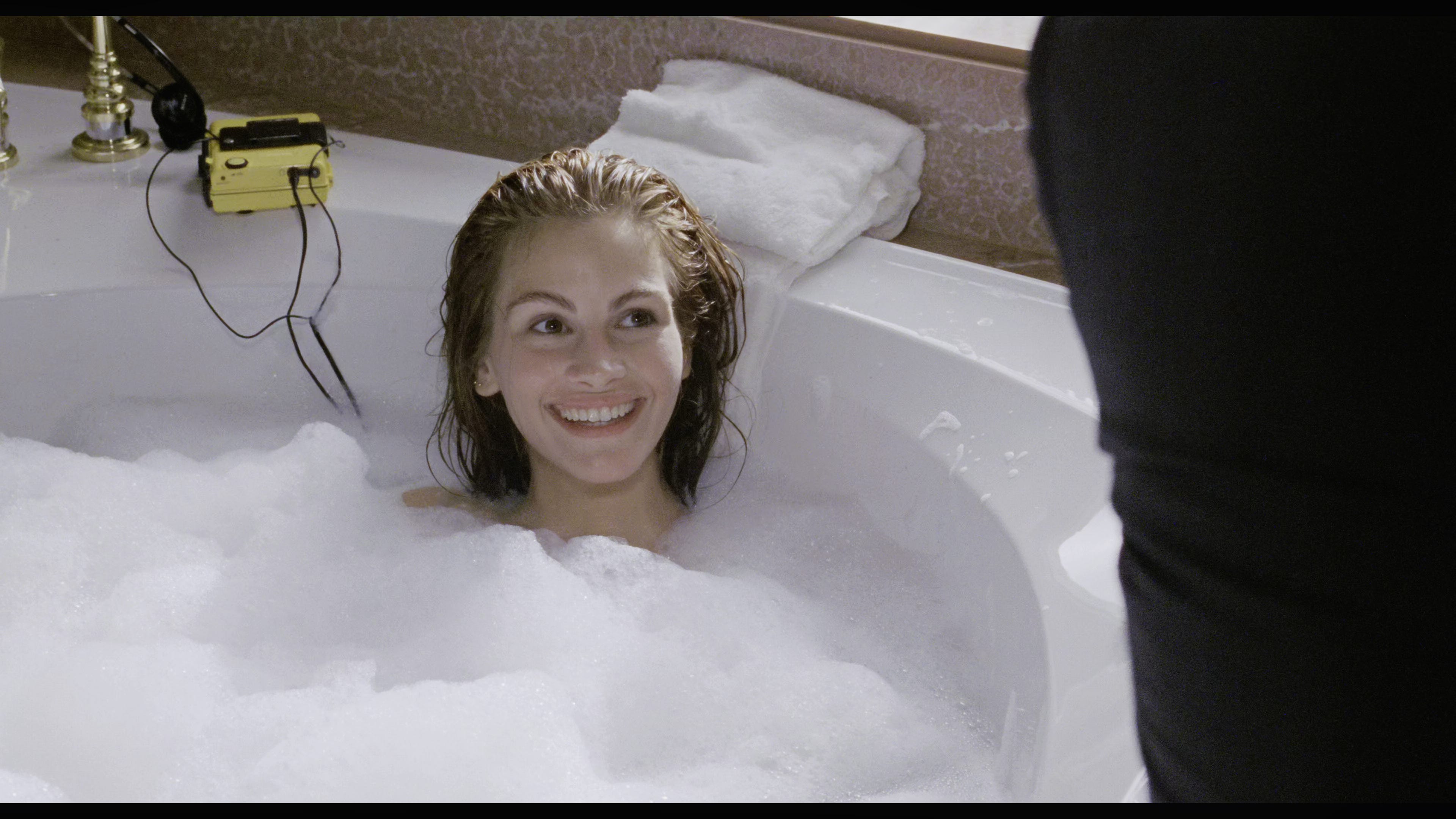
But the one symbol that is being leaned on most heavily here is the water motif where something is hidden and then eventually revealed. First, Edward enters and is hidden from Vivian because her eyes are closed. Then, after Vivian agrees to the offer she is hidden from Edward under the water. Each of them being hidden from the other at one point in the scene is a small, but brilliant, piece of staging that adds another layer of meaning: at this point, neither truly sees the other for who they are. It also hints at Edward’s wound—hidden for now, but soon to be revealed through Vivian’s presence as the Lady of the Lake.
Edward Lewis: Wounded King
Similar to the Lady of the Lake (and most of Arthurian legend, truth be told), the Wounded King stories exhibit a wide variation with differing names (Maimed King, Fisher King) and story elements. But the story is typically some variation on: The king is wounded (usually in the thigh or groin), and his injury renders his kingdom a wasteland. As keeper of the Holy Grail, he waits for a destined seeker whose compassion or right question can heal both king and land. The healing occurs not through power but through empathy.
When these myths originated, external objects and people were used as representations of internal psychological states. But in contemporary storytelling, we prefer a more realistic depiction, and these outward objects are almost always broken down into their psychological constituents.
Edward Lewis has everything society says he should want: success, wealth, respect, and power. He commands rooms. He closes deals. He’s in demand. But beneath the surface lies profound emptiness. He can’t sleep. He’s always working. And what consumes his energy? He buys companies and extracts “value” by selling them off piece by piece. Transaction by transaction, he takes something whole and breaks it apart. And it’s this mindset that has rendered Edward’s life an emotional wasteland.
From the very opening scene, Edward’s transactional logic is on display. When he needs a girlfriend for the week, he calls his secretary to arrange it. “I need you here,” he tells his girlfriend—not “I want to see you,” but “I need you to serve this function.” On the surface, the argument is about the short notice, but in reality, it’s a much deeper issue: an inability to recognize sovereignty in others.
But how did this wound come to be? We learn that Edward’s extremely wealthy father divorced his mother, who was a music teacher, to be with another woman, taking his money with him. Later, Edward’s mother died. A simple story with a deep wound and far-reaching impact.
From his father’s abandonment, Edward learned love is conditional, love is transactional, and the only way to avoid abandonment is to always be the “best”—the wealthiest and most powerful. So he climbs. He stays in penthouses despite his fear of heights. He sits in opera boxes. He accumulates, commands, and dominates. Always the best alternative.
The screenplay releases information about Edward’s father in a perfectly measured fashion, only referencing him four times. He’s never seen, but his presence looms like a large shadow over Edward. Our introduction to Carter is in the first scene by an old girlfriend of Edward’s. He brushes off the mention of “Carter,” momentarily acknowledging but then continuing with the conversation. The second time is by James Morse, where we find out that Carter is Carter Lewis, Edward’s father, and that he passed away. After the Morse dinner, Vivian follows up, asking Edward two questions about his father, and then finishes with, “Do you want to talk about this?” Edward has a simple response: “No.” It’s a great progression. First we hear about the character, then we learn who he is and that he died, and Vivian’s questions let us know that Edward and his father were estranged. The Wounded King can be healed by asking the right question, but Edward rejects the opportunity for healing.
Edward has spent his life destroying. But as a child, he loved to build. In his office, he remembers this. Later, in the bathtub with Vivian, he finally admits to himself what he’s become. Edward is talking while Vivian cradles him in her arms. This is where we hear the backstory about Edward’s mother and father. Edward reveals that he was angry with his father and went to therapy to resolve the issue. When Edward bought out his father’s company and sold it off piece by piece, his therapist told him he was cured. But Edward hasn’t healed from his father’s wound. He’s inherited it. He’s become his father. On the business side he destroys companies like Edward’s father destroyed the family, and in his personal life he emotionally abandons all of his close relationships while always trying to be the best so that no one could choose anyone over him.
As Edward confesses his wound—the abandonment, the anger, the revenge—Vivian washes him. She’s literally cleansing him while he reveals what’s been rotting inside. It’s baptismal. Rebirth through confession and grace.
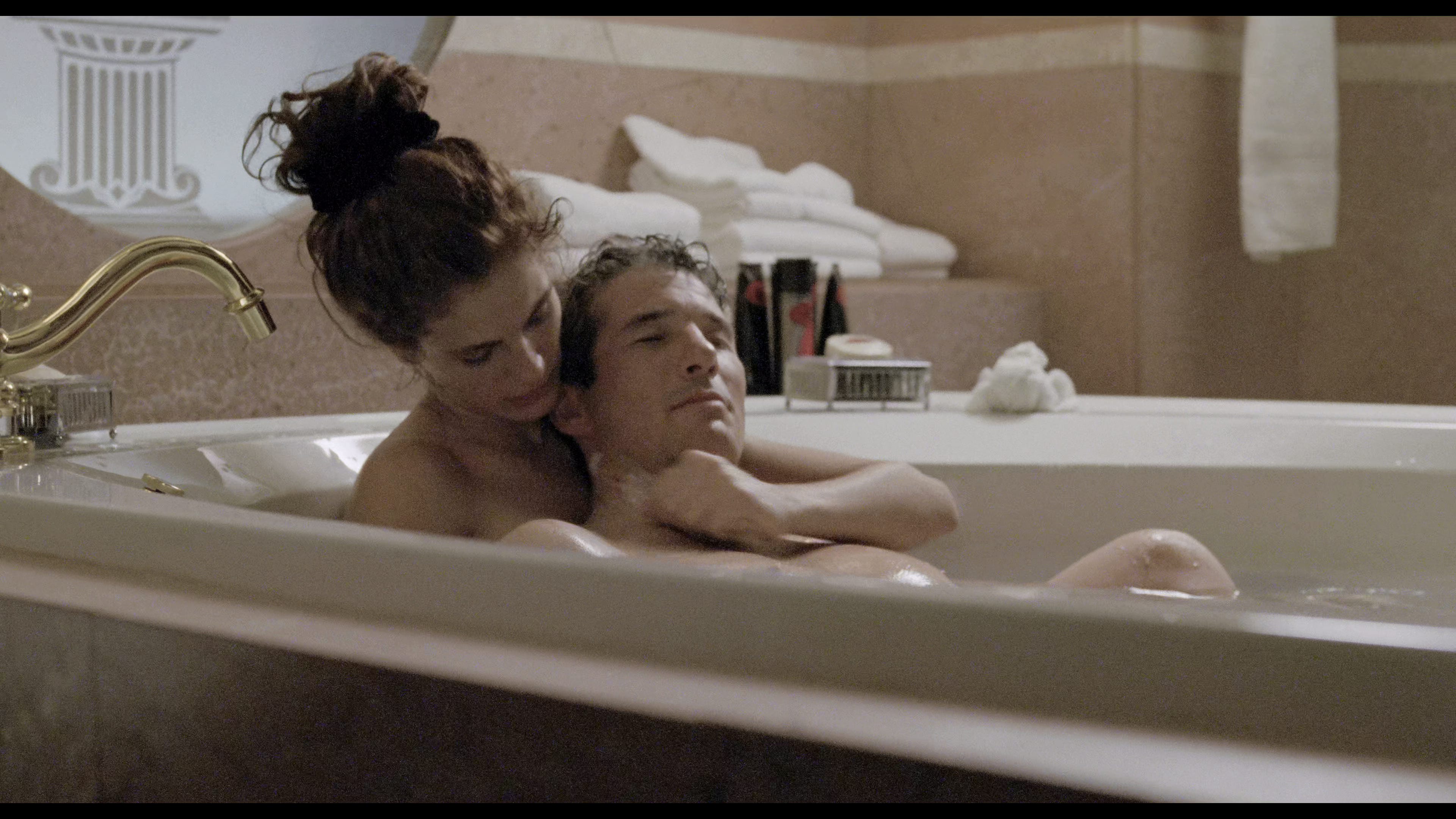
This spiritual cleansing is taking place in water, the liminal home of the Lady of the Lake. This is the threshold between the mortal and the divine, the conscious and the unconscious—the perfect place to be cleansed and healed.
And then, after Edward finishes his story of being “cured” through destroying his father’s company, Vivian asks a simple question: “That must’ve made you happy.” Edward pauses. He doesn’t answer. He places his hands around one of hers and holds the pose.
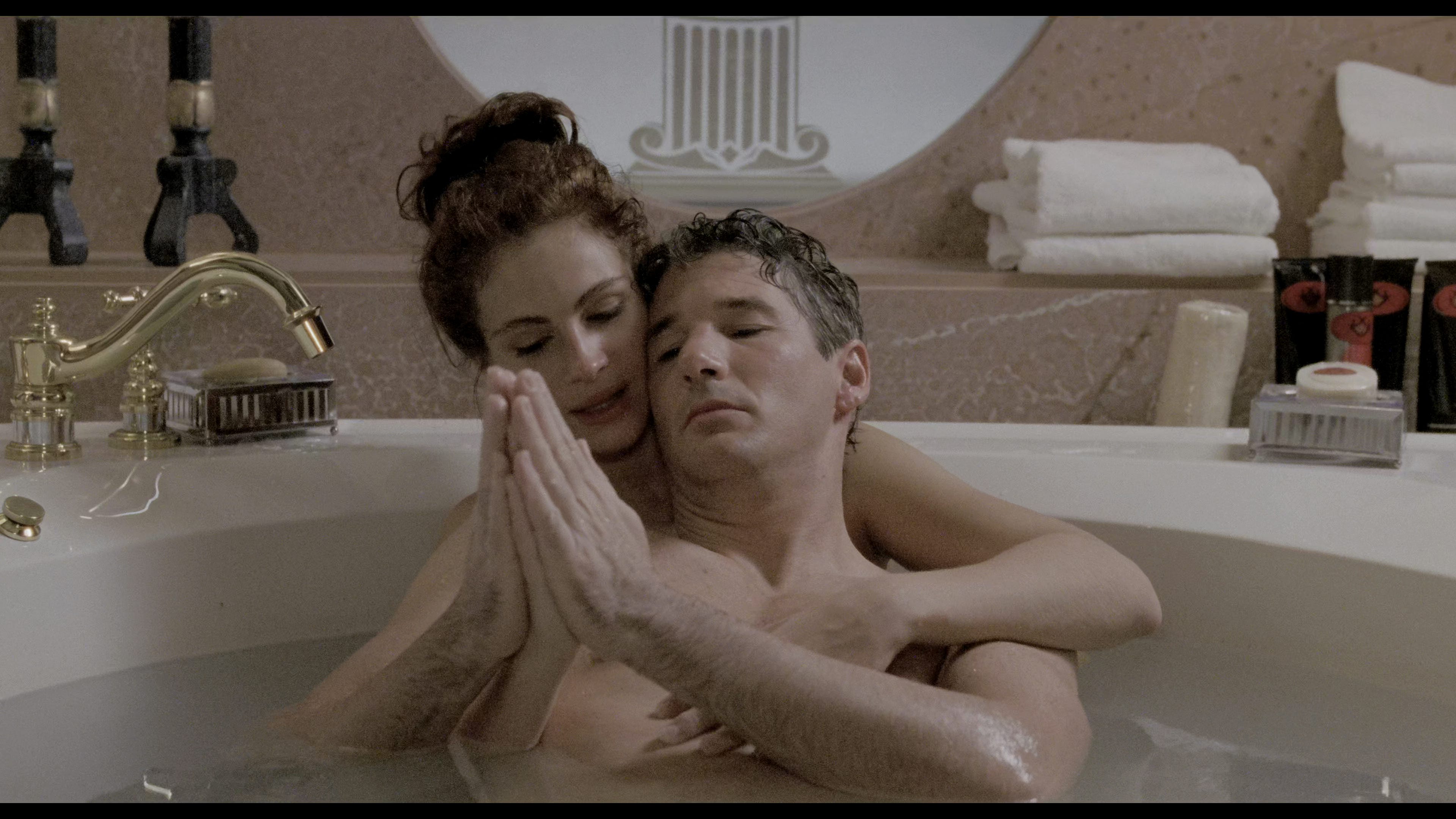
The gesture that follows is unmistakable: it’s the classic pose of prayer and spirituality. Look at Edward’s face—it’s serene, with eyes closed and body relaxed. This is pure surrender, acceptance, and gratitude. From an Arthurian perspective, Vivian asked the question that heals the king.
After a pregnant pause, Vivian changes the topic before the scene fades out:
VIVIAN
Did I mention my leg is 44 inches from hip to toe, so, basically, we’re talking about 88 inches of therapy...wrapped around you for the bargain price of...

EDWARD & VIVIAN (together)
...three thousands dollars.
Like so many times before, the film deceives us with charm. What seems like a sensual deflection, played for humor, is, once again, literally true. Her presence, her touch, her witnessing of his wound—that is the therapy his actual therapist never provided. Once again Garry Marshall hides the truth in plain sight. The “three thousand dollars” line is the final sarcastic beat of the scene, said by Edward and Vivian together, a throwaway humorous accent that is the exact form used to close out so many of the previous scenes.
The Lady of the Lake reveals Edward’s hidden wound in this water scene, which also echoes the “hidden to revealed” motif of the other water scenes we have already seen. And through her asking the right question, being a witness to the wound, and offering acceptance and grace, she allows Edward to begin healing himself.
Barnard “Barney” Thompson: Priestly Guardian
In Arthurian legend, the Grail Castle is the location where the Grail is kept. It’s a threshold space, a symbolic crossroads where the ordinary world falls away, transformation becomes possible, and the king can be healed. In the earliest versions the guardian of the Grail is the king himself, but as the tradition develops (the Vulgate Cycle, Sir Thomas Malory’s Le Morte d’Arthur) a new element to the Grail quest emerges: priests and hermits that guard the path to the Grail, offering the quester spiritual guidance.
If, in the myth of Pretty Woman, the Regent Beverly Wilshire hotel functions as a modern Grail Castle, then the priestly guardian of this sacred space is Barney, the hotel’s manager. He protects the sanctity of the space and acts as a guide and facilitator for those who enter.
In the role of guardian, Barney protects through vigilance. He intercepts Vivian when she tries to return, questions her, and bars her entry when she tries to bypass him; he discerns who belongs in his sacred hall and who does not. In his office he comes to see Vivian’s true nature as a queen (long before she understands this herself) and, in the role of priest, proceeds to guide and facilitate Vivian’s transformation. Later, he plants the seed that leads Edward back to Vivian.
Barney’s guardian role is an active one, used to protect the sacred space, but in his priestly role, he does the opposite—he’s a facilitator. He guides through wisdom, suggestion, and implication rather than authority. Aside from teaching Vivian etiquette, he gives no orders. Everything else is gentle prompting, creating the conditions for others to see what they need to see.
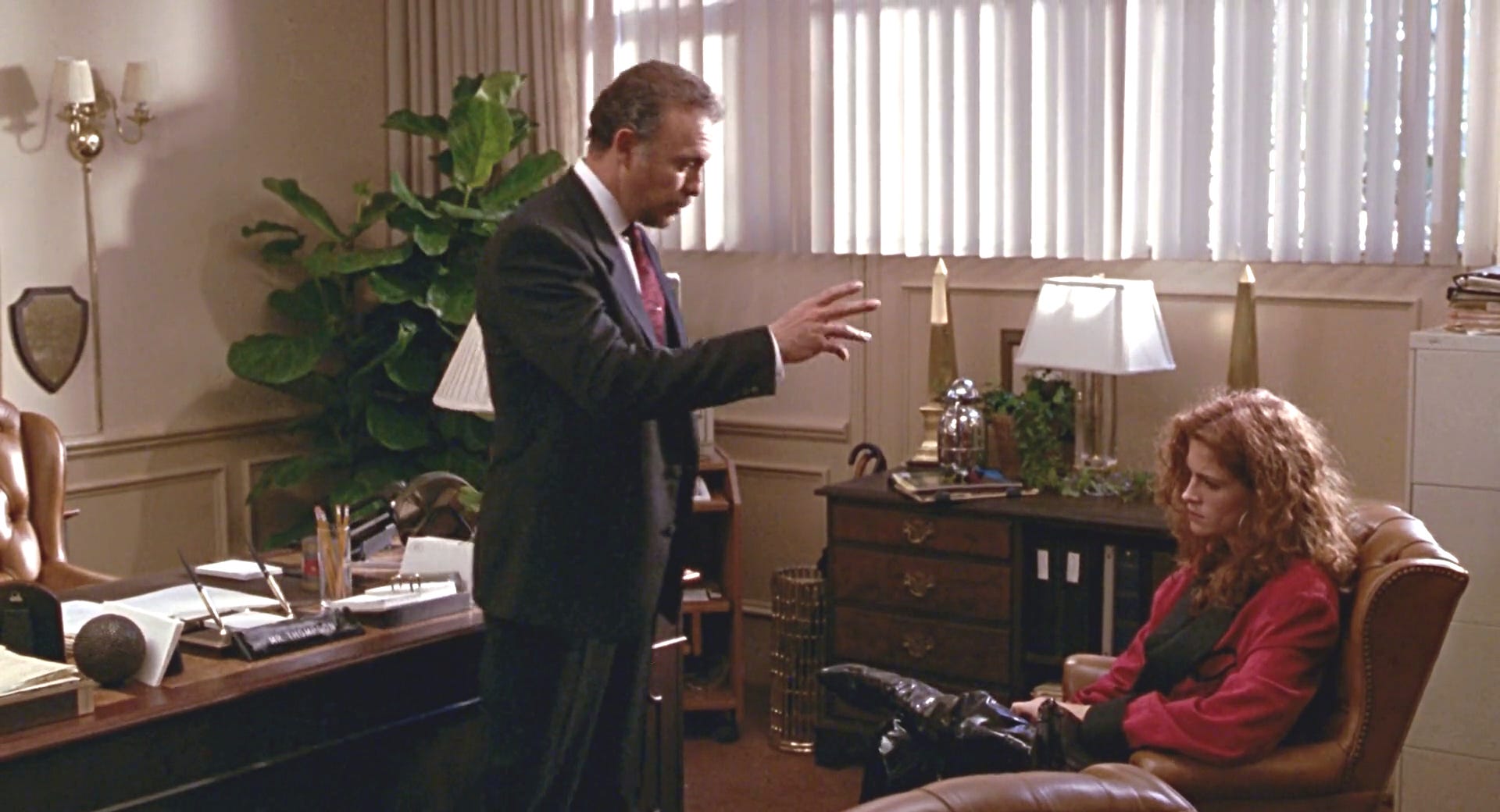
The use of striking imagery supports Barney’s role. During Barney’s office scene with Vivian, he raises his hand and moves it down and to the right. It’s ostensibly showing Vivian the way out to the lobby, but the gesture distinctly resembles a priest performing a blessing. This ceremonial gesture occurs before Barney has consciously understood Vivian’s nature, so it’s either a subconscious movement on his behalf or it’s intended as mythic reinforcement for the audience. Or perhaps both.
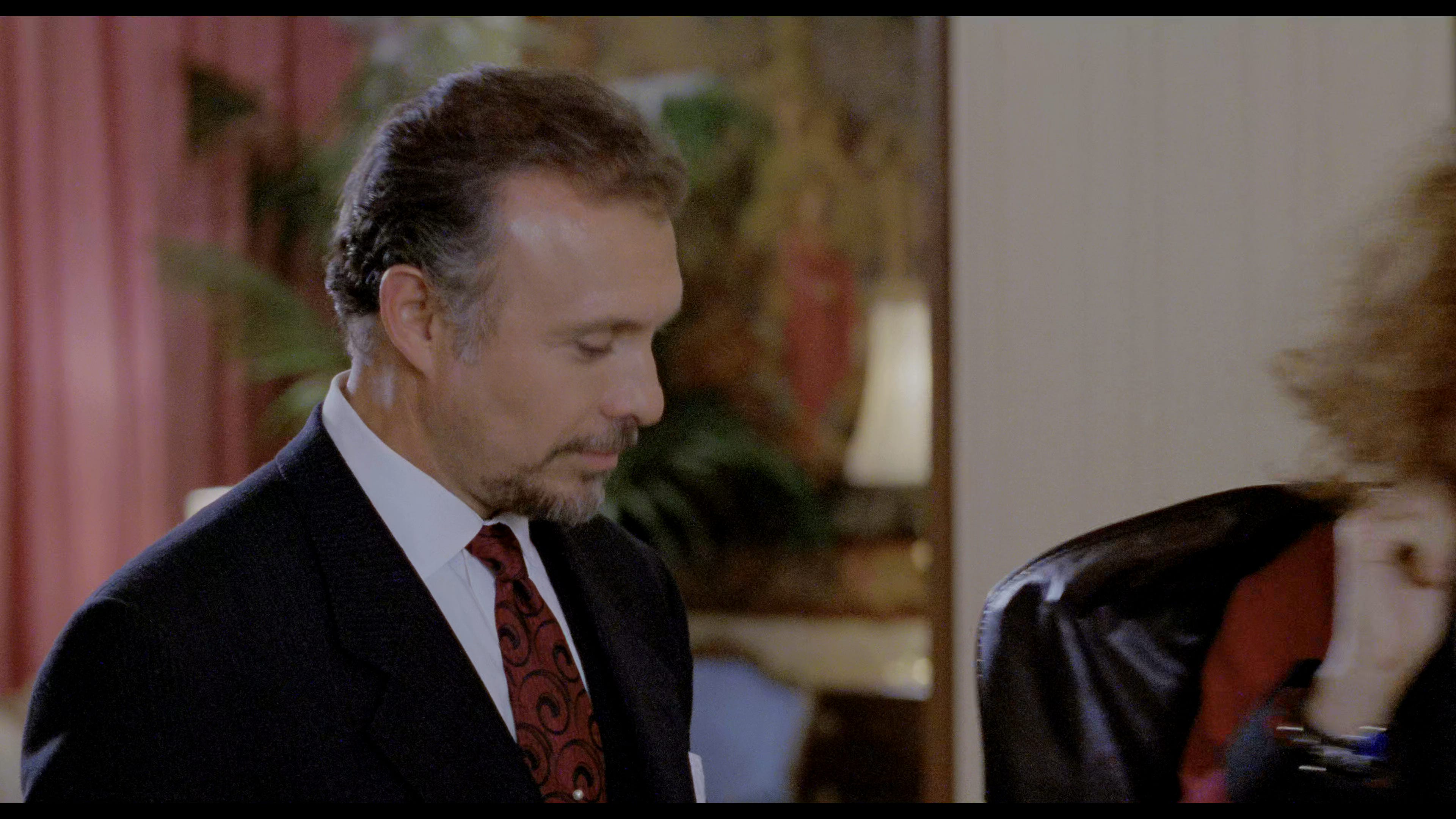
Later, Vivian thanks Barney for helping her buy a dress. As she walks away, he gives a short bow. It’s easy to miss but rich in meaning. At the moment Barney bows, Vivian has already turned away, so the bow is not for anyone’s specific benefit—it is simply the recognition of the divine.
Healing the Wounds
My original formulation talked about Vivian as the Loathly Lady and the Lady of the Lake. But you may have noticed I’ve also referred to her as a queen—circling around an idea I’ve been skirting. I’m forced to admit that, like Pretty Woman itself, I may have told a lie. A lie of omission. Vivian functions as the Loathly Lady and the Lady of the Lake, yes. But her true end state is that of queen.
So far we have seen how Vivian, as the Lady of the Lake, has helped to start healing Edward, the Wounded King. But what about Vivian’s transformation? How does that occur? The answer, unsurprisingly, uses the same crafty method we’ve seen throughout: hiding the obvious in plain sight, visual symbolism, and subtext.
Vivian’s Confession
The third act begins with Vivian and Edward lying in bed talking.
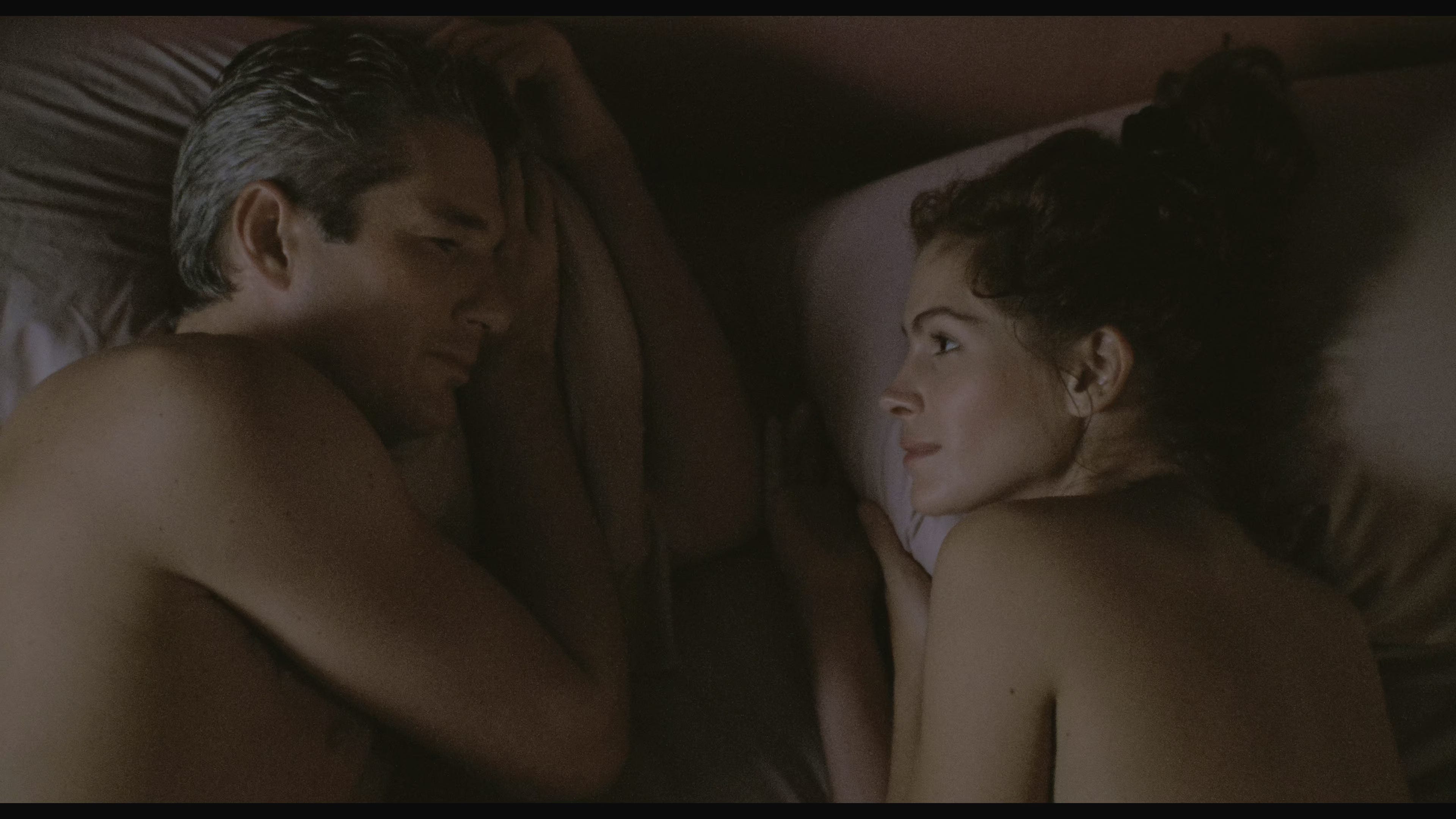
This scene is almost the opposite of the earlier bathtub scene with Edward and Vivian as the Lady of the Lake: water vs. bed, light vs. dark, closely touching vs. isolated, even the primary speaker is reversed. But the one similarity is that in both scenes each character is confessing their wound. Vivian reveals she’s always been a “bum magnet.” “Bum magnet” is such a casual, diminutive phrase that its true meaning is obscured. It’s an indirect revelation—she’s attracted to men who are “a total nothing” because she feels that is all she is worthy of. Later she voices what she has internalized: “People put you down enough, you start to believe it.” Her profession becomes the external manifestation of that wound. She’s literally selling herself to men she perceives as broken or unworthy because that’s all she thinks she deserves to attract.
In terms of visual composition, Vivian and Edward are positioned symmetrically in the frame, mirroring each other, which aligns with the functioning of the scene. Vivian confesses her wound, and Edward mirrors back to her how he sees her—as someone “very bright, very special.” And Vivian’s response: “The bad stuff is easier to believe. You ever notice that?” Vivian in this scene functions as a Loathly Lady to herself! She voices her inner wound (“bum magnet”—her loathsomeness in this context), she receives back from Edward his positive reflection of her wound, and she rejects this view of herself. She fails this test, but the naming of her wound marks the beginning of her ascension.
A Night at the Opera
Next up is the opera sequence. It’s one of the most memorable in the film, a callback to classic fairy tales such as the ball from Cinderella. The opera they attend, La Traviata, mirrors Vivian’s arc, but even with that added subtext, the key scenes don’t occur at the opera at all. The most important scenes are the ones that bookend the entire sequence: the wearing of the jewels and the post-opera chess game.
Vivian emerges from the bedroom resplendent in a red, form-fitting dress with elegant white gloves covering her arms up to and over her elbows. It’s one of the most iconic looks from the film, with the rich color and formal elegance giving Vivian the appearance of royalty.
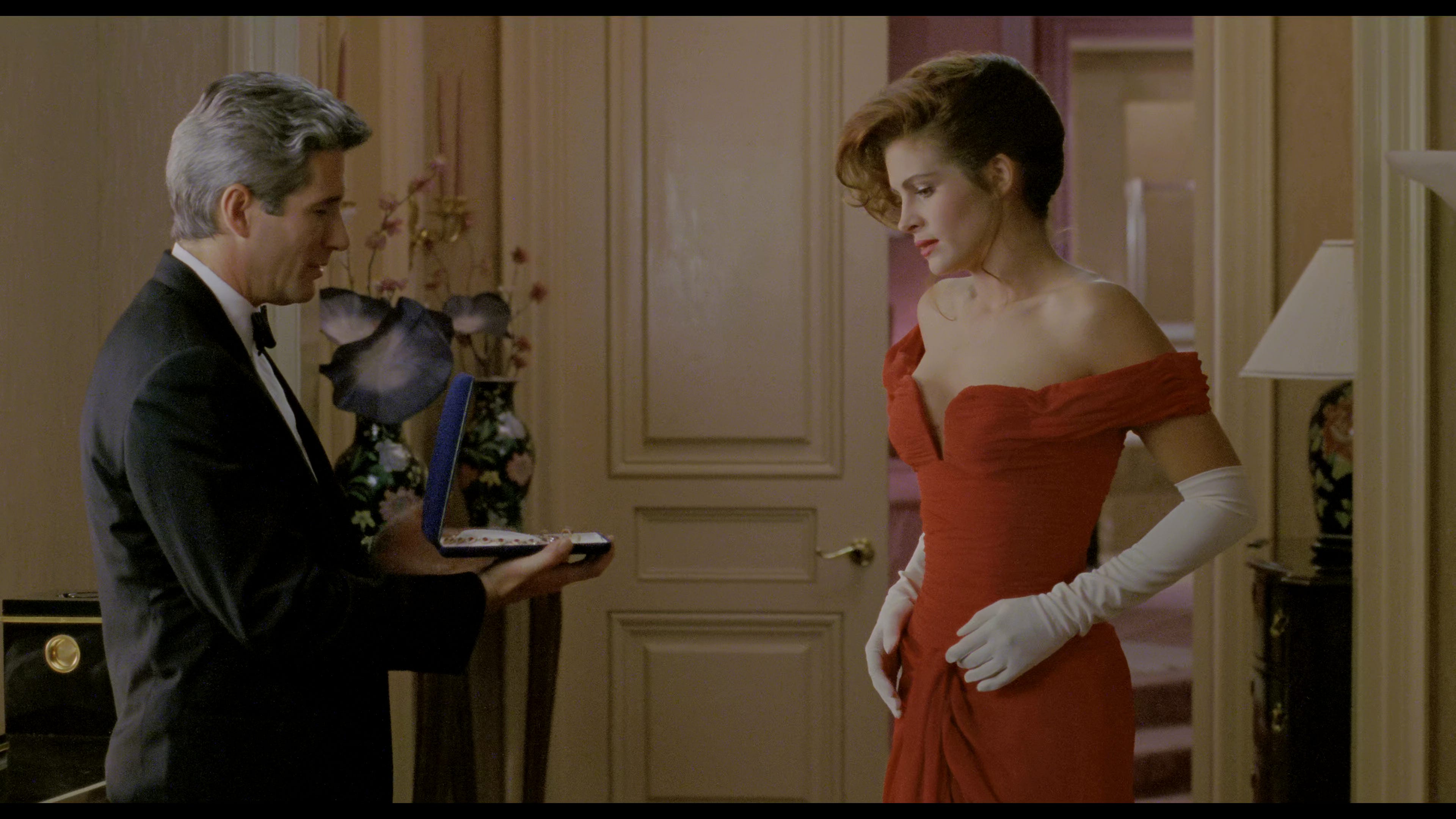
The final item to finish the outfit is an expensive matching necklace. Edward places it around Vivian’s neck. It feels like a coronation, with the necklace representing Vivian’s crown. This is the moment when Vivian truly looks like a queen, Edward treats her like a queen, and the world sees her as a queen. But it’s a false coronation. The jewels are actually on loan; the borrowed crown is a false Grail because Vivian can’t receive a crown from Edward. She has to claim her own—because in Arthurian romance a true coronation can’t be bestowed from above; it has to arise from within, whether that is purity, spiritual enlightenment, or, in this story, the recognition of one’s own worth.
The Queen
After the night at the opera, we cut to the limo arriving back at the hotel. We hear the following in voice-over:
EDWARD
No, don’t touch..

VIVIAN
I moved the queen. I like the queen.

EDWARD
You can’t move the queen.
Edward is telling her not to touch the queen, but Vivian ignores this and moves the queen anyway. The queen represents Vivian, and this is her way of declaring her own agency and developing her internal sovereignty. Edward’s response seems to defy chess logic—the queen is the most powerful piece. But perhaps Edward isn’t speaking about chess at all. Perhaps he’s speaking to himself: “I can’t move the queen. The queen has to move herself.”
The scene cuts to them playing chess. It’s one of the most mythically charged images in the film.
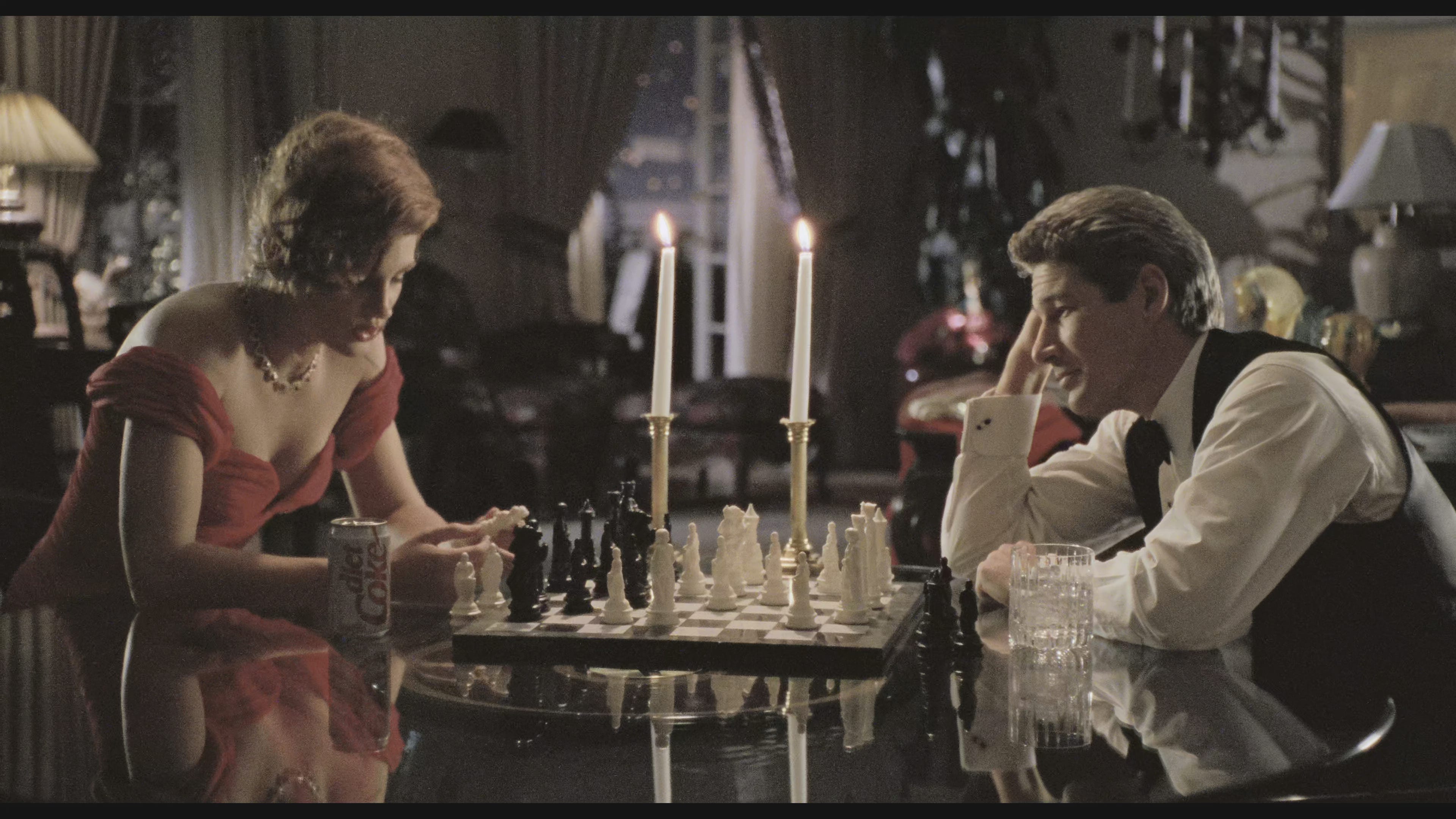
We see that Edward’s jacket and Vivian’s gloves have been removed. They are relaxing after the formal opera but also revealing more of themselves. The chess pieces are positively medieval in style, invoking the Arthurian period—the very era when chess first arrived in Europe. The board reflects on the glass table, which also mirrors Vivian and Edward, while a glass of water sits next to Edward. The tabletop resembles the surface of a calm lake and, combined with the glass of water, echoes the earlier healing scene in the bathtub. The shot is canted, tilting the world horizontally so that Vivian appears slightly higher in the frame. This symbolizes her ascension as well as reminds us that, despite the symmetrical composition, they are not yet equals.
As the scene unfolds, Vivian proceeds to convince Edward to take a day off work. We later discover that this is virtually unprecedented. And all this time Vivian has been holding a captured white knight in her hands. In the fairy tale Vivian will later describe, Edward becomes the knight on a white horse. In this scene she literally holds his symbol in her hands, further demonstrating her developing agency. Looking back, outside of her earlier Lady of the Lake moments—when she guided or healed Edward through water—this is the first time she exerts real control in the world. Consider the sequence: humiliated by the shopkeepers, aided by Barney (via Bridget), taught dining etiquette by Barney, taken shopping and to polo by Edward, propositioned by Stuckey, and taken to the opera. Here, finally, she acts rather than reacts. She’s the one who now guides and moves the queen.
The Mythic Montage
Edward does take the day off. And the first shot of the scene tells us exactly where each of the characters is in their journey so we can explicitly see where they are and where they end up.
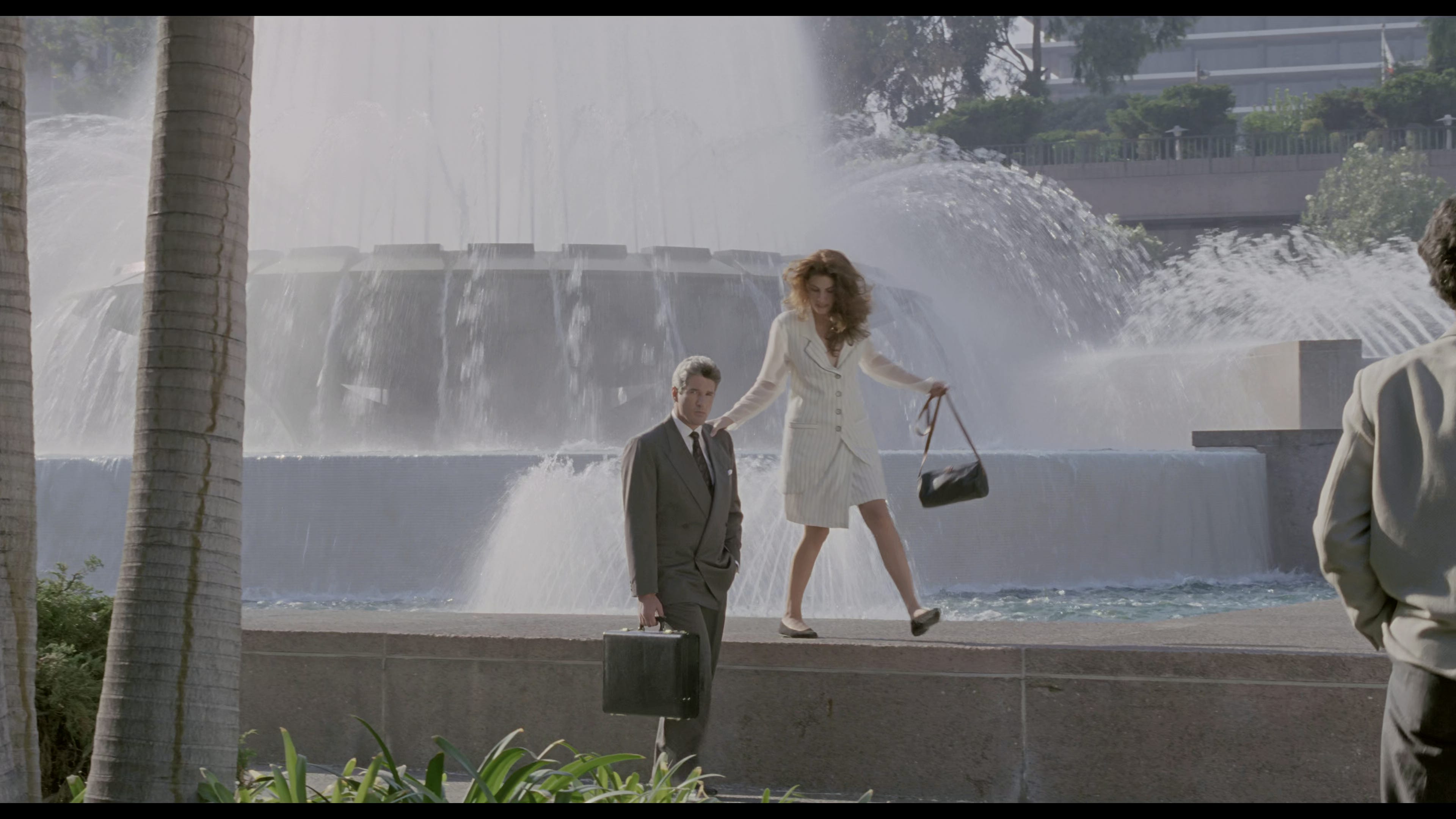
Edward, on his day off, has decided to bring along his briefcase. So even though he’s taken the step of not going to work, he’s still in the transactional business mindset. Vivian is walking on the low fountain wall. She’s starting the day still in her Lady of the Lake function: close to the water fountain, above Edward as a guide. Vivian then jumps down, simultaneously leaving the fountain and uniting with Edward on the same level. She’s abandoning her Lady of the Lake role as they both walk away from the fountain. Vivian is directing the action, informing Edward that “you’ll buy a snap dog. We’ll cop a squat under a tree.” Some dialogue ages better than others, unfortunately. Vivian then removes Edward’s shoes and socks and literally plants his feet into the earth and then takes away his cell phone and hangs it up. Vivian cuts the line to Edward’s transactional world, and she literally grounds him. The next two shots show Edward reading poetry and both of them talking while sharing cups of coffee in a small diner. It’s a far cry from the upscale dining with the Morses, but these last two interactions are pure connection, devoid of transaction. Just two people enjoying each other’s company for the sheer joy of it. This entire montage is not even one minute long, but it manages to show that the healing for both Vivian and Edward has taken place. But, wait, you might ask: you can’t possibly know that. I’ll admit that’s true. Not until we get a more definitive sign.
The Sleeping King
After the montage, we fade in to the penthouse. Vivian is in the bathroom getting ready for bed. She leaves the bathroom and sees Edward sitting up in bed, his eyes closed. Quietly she says,
“He sleeps.”
The mere act of acknowledgment shows that not only have we, the audience, never seen Edward sleeping, but Vivian herself has also never seen him sleeping. This is the moment of Edward’s transformation. He doesn’t have to worry about abandonment or trying to be the best; he can relax, and the Wounded King can finally rest. Now Vivian moves to the bed, smiles at him with joy, savors the moment of decision, and intentionally decides to break her rule of no kissing on the lips. It’s a sovereign decision, one that’s not taken lightly and is totally non-transactional. In an inversion of the classic fairy tale, her kiss wakes Edward up. A tender love scene ensues, and it’s the first one where they are truly equals. On the first night it’s Vivian tending to Edward. And in the lounge on the piano, it’s Edward trying to extract a kiss on the lips from Vivian while she manages to avoid intimacy. But now, as they are healed, they can truly be open and connected with each other.
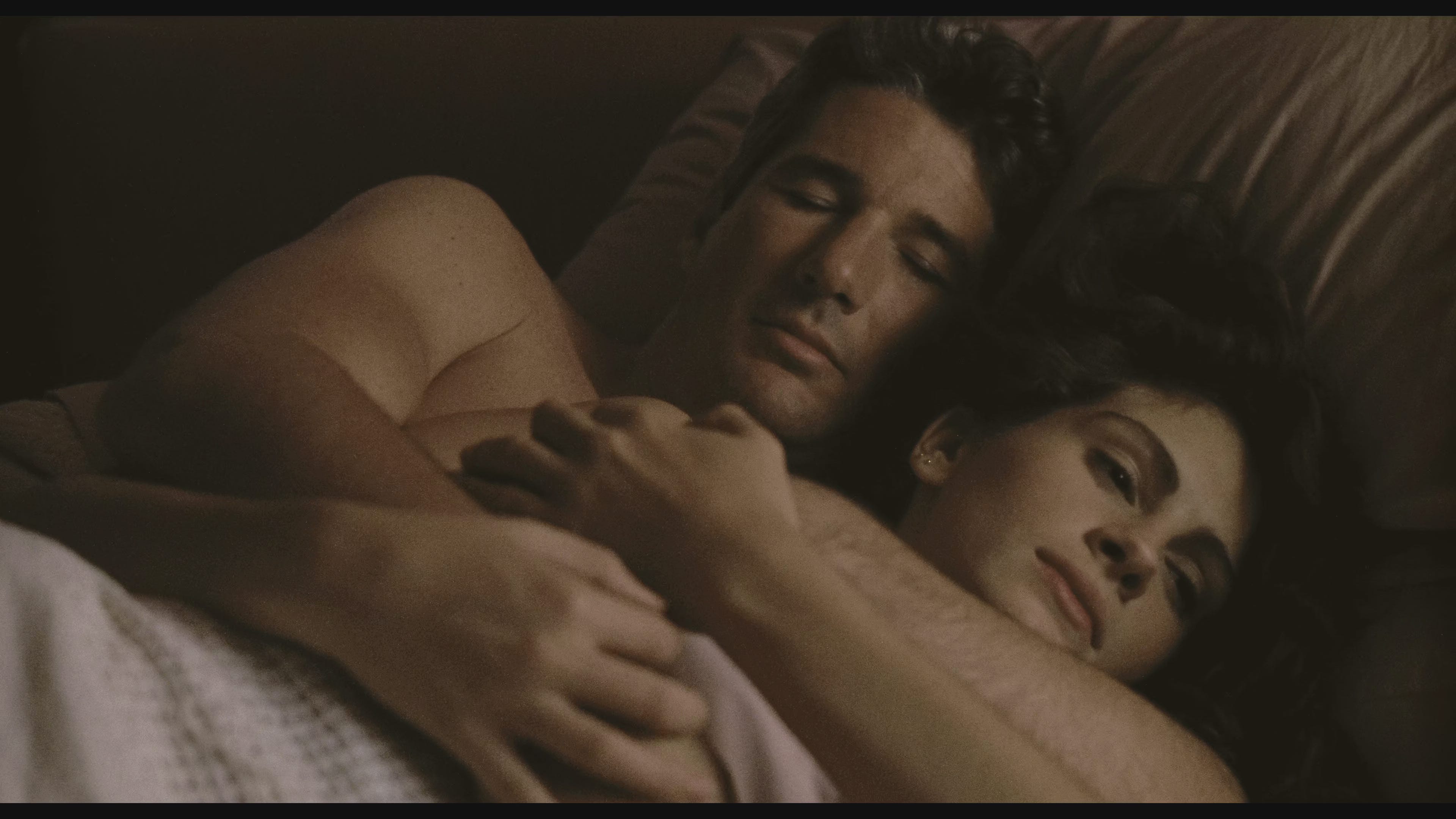
The scene ends with a sleeping Edward holding Vivian in his arms while she caresses him. She says, “I love you.” Her eyes close while Edward’s open. Vivian confesses her love for Edward. It’s easy to write this off as the standard rom-com trope of the overheard confession. But since this is Pretty Woman, I think there’s an alternate interpretation. Edward is sleeping, and she’s facing away from him, so it’s possible that she’s not speaking to, or even about, Edward. Perhaps, at this moment, Vivian is actually speaking to herself. The “I love you” whispered aloud is not a confession of love but a declaration of self-worth, the realization of sovereignty, and the full ascension of the queen.
An Offensive Offer
The next scene cuts to Edward at the table eating breakfast in a callback to the breakfast scene after Edward and Vivian’s first night together. The difference is that at that time, Edward sat at a table full of food, focused entirely on his newspaper. Now, the newspaper is still there, but Edward is eating. Even with the Morse meeting taking place entirely over dinner, this is the first time we’ve seen Edward eat. First the king rests, and now he rebuilds his strength. The previous two scenes of symbolic transformation, along with this new behavior, prime us to witness Edward’s internal change manifest in the world. Edward starts strong, “I’d really like to see you again,” much to Vivian’s delight. But the newspaper still in the picture should maybe have triggered some alarm bells because Edward slips back into his transactional thinking, uttering the tone-deaf remark, “I’ve arranged for you to have an apartment, to have a car…” Vivian’s face drops, and she appears more offended than disappointed. The discussion moves to the balcony, where Edward, in another first, comes fully out onto the balcony. On their first night he wouldn’t go out there, then after the Morse meeting he was “halfway out,” and now, he’s out but close to the doors. Edward’s behavior has changed; he’s moving forward, reflecting the real psychological change underneath, but he hasn’t fully been able to let go of his transactional ways. Vivian then lays out her fairy tale with the knight on a white horse rescuing her from the tower. The phone rings—it’s Stuckey announcing Morse is ripe for the picking, and Edward is more than happy to leave this uncomfortable conversation.
This is where Vivian’s transformation becomes undeniable. Vivian’s deep wound was that her low self-worth caused her to be attracted to and follow bums (or what I called broken men). That’s how she ended up in Hollywood—by following bum number three. Now Edward, a healing but still broken man, makes her an offer that still treats her transactionally, and she rejects the offer immediately. Actually, it’s more than rejection; she is emotionally hurt at being treated as an object that can be purchased. Vivian’s newly discovered self-worth allows her to reject both the offer and the broken man behind it, assert her sovereignty, and become the queen that Barney has seen all along.
Edward Lewis: Builder
We cut to the boardroom where Morse and Edward’s team are meeting to finalize the deal. Everyone is sitting except Edward, who is pacing back and forth near the head of the table, looking slightly on edge. James Morse explains that he has “reconsidered” his position but has one condition:
I’m not so concerned about me, but the people who are working for me.
Stuckey brushes it aside instantly: “It’s not a problem. They’ll be taken care of. Well, then, gentlemen.” Stuckey doesn’t give it a second thought; a few dollars will solve the problem. The contrast is stark. Morse has only one condition—protect his people. Stuckey dismisses the entire human cost with a shrug.
Edward shakes his head, as if finally processing the real-world consequences of his actions. Then he interrupts Stuckey: he wants to speak to Morse alone. Edward clears the room because transformation is inherently private. It requires vulnerability and the shedding of defenses. Alone with Morse, Edward can drop his tough business exterior and, for the first time in a boardroom, allow himself a moment of grace.
Edward dotes on Morse, closing the blinds to soften the glare and pouring him a cup of coffee. They’re small gestures, but in mirroring Morse’s innate kindness, Edward quietly reveals his own transformation. He does like Mr. Morse, as Vivian intuited earlier, and Edward’s actions aren’t motivated by a desire to close the deal. They are purely non-transactional: acts of kindness for a man he respects. This is the moment where Edward decides. Decides to heal his wound. Decides to build instead of destroy, serve instead of command, and be kind instead of ruthless. And the culmination of Edward’s journey occurs when James Morse puts his hand on his shoulder and says, “I find this hard to say without sounding condescending, but... I’m proud of you.” There’s a pregnant pause where you can insert the unspoken word yourself: “son.” Edward bows his head emotionally and accepts this blessing from Morse. In a way, James Morse has now become Edward’s surrogate father. Notice that David Morse, the protégé being groomed to take over the company, isn’t James Morse’s son—he’s his grandson. Which leaves room for Edward to symbolically fill that missing place.
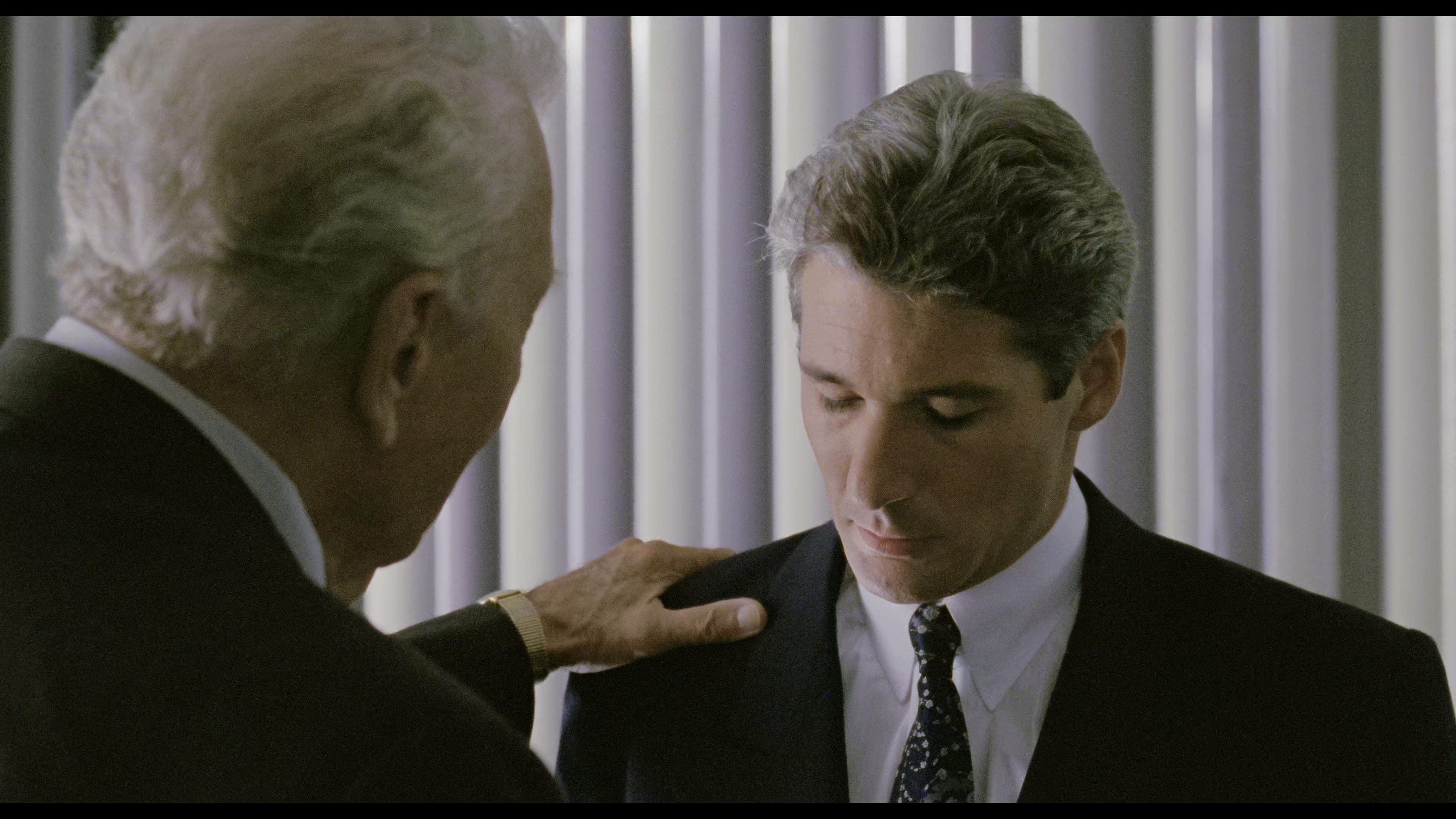
Later Edward violently severs his relationship with Stuckey, closing that chapter and rejecting his previous transactional life.
The Fairy Tale Ending
The film ends with Edward enacting Vivian’s fairy tale. Edward arrives in a white limousine instead of on a white horse, he carries an umbrella instead of a sword, and he climbs the “tower” to rescue her. When he gets as high up as he can, he asks, “So what happened after he climbed up the tower and rescued her?” Vivian delivers her famous line, “She rescues him right back,” and they kiss. Once again it’s an inversion of the traditional fairy tale, and we’re hitting all the happy-ending rom-com beats. I’d always thought this was more of an epilogue and not necessary to the story; nothing but an ornamental bow to wrap up the film. But I was wrong.
Yes, Vivian and Edward’s arcs were completed earlier: Vivian was already rescued the moment she said “I love you” in the darkness and reclaimed her self-worth, and Edward was already rescued when he chose to build instead of destroy, breaking his father’s cycle and receiving Morse’s blessing as a son. Since their arcs were complete, I thought this ending wasn’t adding anything meaningful to the story. But now I think it actually ties into the Grail quest. In its medieval form, the Grail symbolizes potentially many things: spiritual perfection, healing, or salvation. But in a modern Grail story, the external object is removed and replaced with direct internal psychological meaning. In this sense, when Edward is healed, he has found the Grail.
This ending scene echoes the Arthurian Sarras episode, where the knight that achieves the Grail is directed by a messenger to bring the Grail to Sarras (a mystical island), and, once there, the knight becomes a king. In Pretty Woman, the messenger is Barney, providing the information for finding the way: “You know, Darryl also drove Miss Vivian home yesterday.” Edward goes to Vivian because he passed the test and found the Grail, and now he must present it to her using the correct ritual. Vivian names the ritual she demands—a knight climbs the tower and rescues the princess. But what the fairy tale doesn’t say out loud is the crucial part: the knight must already be worthy. The rescue isn’t the test; it’s the final act that reveals the knight has passed the real trial. When Edward ascends, the king and queen are united, and the fairy-tale ending marks the true completion of the quest, where Edward’s wasteland is finally made whole.
It’s a satisfying ending, but there is one more inversion hiding in plain sight. Vivian once described her wound as being a “bum magnet.” Now that she has discovered her self-worth, claimed her sovereignty, and stepped fully into her queenly role, she no longer attracts—or is drawn to—“bums.” She attracts a king.
And of all the hidden-in-plain-sight elements in Pretty Woman, this reversal might be the most audacious of all: Vivian becomes, quite literally, a king magnet.
The Lie Revisited
In this essay I’ve looked at Pretty Woman through an Arthurian lens and revealed its surprising depth, but with mythic roots this strong, I suspect alternate readings could also be rewarding. What’s remarkable about Pretty Woman is that some of the scenes people remember most—the “revenge” on the shopkeepers, the “Pretty Woman” montage, even the opera—are not the mythically essential ones. They’re mostly ornamental, the glossy sheen that helps make the film beloved. The actual transformations happen quietly: in water, in vulnerability, in moments of genuine connection. Marshall’s genius is making us feel the depth through comic irony and visual symbols. Other directors shine a bright light on their themes with kinetic camera work or epic music. Marshall hides his quietly in plain sight. The foundational mythic architecture supports and enhances the emotional experience without showing itself. And that truth is the beautiful lie at the heart of Pretty Woman.
Ready for more insights? Every Cinemyth essay is free, unlocking the symbolic structures behind your favorite films. Subscribe now.
You do a beautiful job tracing the path of healing that both Edward and Vivian follow. Thanks for your thoughtful analysis of the mythic themes.