
Anti-Mythic Time
High Noon and Once Upon a Time in the West
My essay on Once Upon a Time in the West (1968) introduced the idea of Mythic Time.
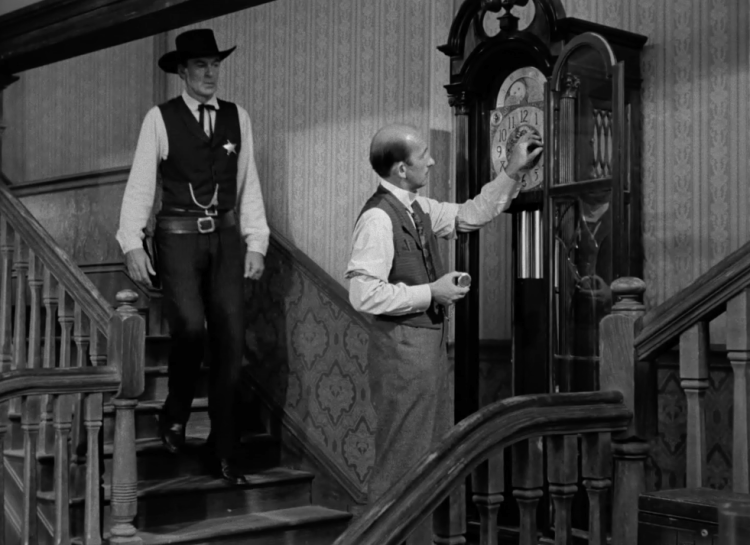
Leone’s glacial pacing infuses his mythic characters with symbolic weight. But what about High Noon (1952)? It’s another iconic western but one where the use of time is even more explicit. In High Noon the ticking clock is integral to the narrative but it raises the question about whether or not High Noon employs Mythic Time?
The story of High Noon certainly qualifies as mythic; Kane is an archetypal character. But does High Noon’s use of time signal a departure from the real world? No. In fact, instead of signaling a departure from the real world the ticking clock of High Noon serves to ground the film firmly in reality. This isn’t Mythic Time—it’s the opposite. We might call it Anti-mythic Time.
Yet this tension isn’t a flaw. The real-time structure serves to sharpen the contrast between the mythic characters and the anti-mythic use of time. But that is a subject for another day.